
Can an Artist Sue an AI for Copyright Infringement?

Adam Basanta, a Montreal-based artist, created a computer system that runs on its own and produces a stream of randomly generated abstract pictures (“creation”). A machine learning (AI) program compares these pictures to a database of art and, if they pass a certain threshold of similarity, posts these pictures online with the name of the artist and original artwork, along with the percentage of similarity (“validation”). This “art factory” produces 1,000 – 1,500 images per day, and approximately 20 to 50 of these are validated. These online images are not sold.
Amel Chamandy, an artist and owner of Montreal’s Galerie NuEdge, is suing Basanta for $40,000 in damages for copyright infringement of an artwork Chamandy produced in 2009 titled “Your World Without Paper” (below, right). The allegedly infringing image is called: “85.81%_match: Amel Chamandy 'Your World Without Paper', 2009" (below, left).

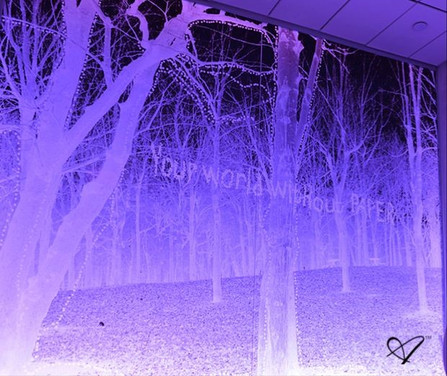
Chamandy alleges this is an act of infringement that illegally diverts internet traffic away from NuEdge’s website and allows Basanta to unduly benefit from the goodwill and reputation associated with the name and trademark “AMEL CHAMANDY”. Chamandy argues that both an artist’s name and their work should be protected online: “[t]he digital world has become a means for artists and art dealers to promote their works and for that reason, it is important for copyright to adapt to the digital era in order to keep protecting artists who worked hard to be able to live from their art.”
Copyright law with regard to AI is not well developed in Canada, as this case has brought to light. Jeremy de Beer, a law professor at the University of Ottawa’s Centre for Law, Technology and Society, opined that issues about copyright and intellectual property law will go far beyond just this case, as society moves into an era of more advanced AI. One of the key issues is how to decide authorship as AI systems improve at generating creative works on their own. De Beer explains: "[t]here are a couple of different options from an ownership point of view. One is to grant ownership to the machine itself. Another is to give copyright to the programmer, and yet another one is to give copyright to the program user. Or we could put copyright into the public domain.”
Yet the question should be framed in terms of the reasons society grants copyright at all: "[t]he rationale for giving copyright protection is based either on the need for an incentive...or the reflection of an author's personality in a work. Neither of those justifications hold up when we're talking about machines," said de Beer.
This case highlights the uncertainty in Canadian law as to authorship and copyright infringement, and whether an individual should be held liable for the randomly generated product of an AI machine. Teresa Scassa, a professor at the University of Ottawa who specializes in information law, believes this is the “tip of the iceberg” for this kind of litigation in Canada.
Author: Abid Khalid
Photo Credit: https://unsplash.com/@possessedphotography